Hunter’s Bump in Young Performance Horses (and Racehorses): More Than Just a Cosmetic Quirk

Updated: Sep 15, 2025
A “hunter’s bump” isn’t just an old-fashioned turn of phrase. To the racing man or the sport horse rider alike, that raised bit of bone over the croup — the tuber sacrale — often signals deeper trouble in the sacroiliac region. In young Thoroughbreds it can mean a short career; in sport horses, a long slog of rehab. Either way, the bump isn’t harmless or just one of those things.

What is a Hunter’s Bump?
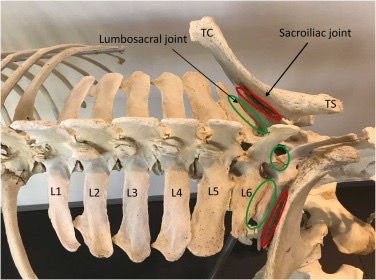
The bump is simply the tuber sacrale standing proud. It’s most visible when the muscles over the pelvis waste away, or when the sacroiliac ligaments are strained and allow a shift in the pelvis. The appearance may be subtle, or glaringly obvious — unilateral or bilateral.
“Chronic overuse of the SI joint, muscles, and ligaments in the region can all lead to pain and inflammation and create a hunter’s bump.” — The Horse

Who’s at Risk?
Thoroughbreds in training: Two-year-olds galloping daily on the track are prime candidates. The repeated drive-off from the hind end, the torque on turns, and the sheer speed place enormous stress on the pelvis and SI ligaments. Racing yards often see stress fractures of the pelvis or sacrum, sometimes presenting with a hunter’s bump before a horse ever goes properly lame.
Warmbloods and sport horses: Jumpers, eventers, and dressage types, especially those rushed in training, often develop the bump due to ligament strain or asymmetry of musculature.
So, while the “hunter” in the name might suggest a field hunter, the bump is just as relevant in the yard at Newmarket as it is in a dressage yard in sheffield.

Causes in Thoroughbreds and Racehorses
Pelvic stress fractures are the big one. High-speed gallops on firm ground can fatigue the bone, leading to tiny cracks that gradually shift the pelvis. The tuber sacrale then becomes uneven or raised. Horses with pelvic fractures often “lose their action” or suddenly refuse to stride out.
Sacroiliac ligament strain, particularly if the horse is unbalanced behind or favours one lead.
Muscle wastage during box rest or following injury, which unmasks the prominence of the bone.
Spotting the Signs in Racers
Flat trainers and work riders often pick up the clues first:
A horse suddenly “loses its kick” up the gallops.
Reluctance to stride out freely or maintain speed.
Shifting lameness behind, sometimes hard to pin down to a limb.
Tenderness at the top of the croup.
Sometimes, the only outward sign before a fracture is visible is that subtle hunter’s bump. Early recognition can literally save a career.

Diagnosis
For Thoroughbreds, scintigraphy (bone scans) are often used when lameness is vague or intermittent. They are particularly good at spotting pelvic stress fractures before they become catastrophic. Radiographs can confirm displacement if it’s significant. Ultrasound is used for soft tissue changes around the sacroiliac ligaments.
Treatment and Rehabilitation
Stress fractures in TBs: usually require strict rest and then a careful walk exercise programme. Box rest alone is dangerous — horses do best with controlled in-hand walking as soon as they are safe to do so. Some return to racing, though not all.
Ligament strain in sport horses: rest, anti-inflammatories, and months of physiotherapy and strengthening.
All cases: time is the key — horses need months, not weeks, to properly remodel bone or heal ligaments.
Encouragingly, both TBs and sport horses can return to full athletic function with proper management, though the prognosis is more guarded with fractures that displace the pelvis.
Prevention
In racehorses:
Vary gallops and footing where possible.
Careful workload management in two-year-olds.
Pay attention to early signs — don’t dismiss a “bump” as just a thing they get.
Low payload exercise like water treadmill and hydrotherapy
Regular body treatments
Good farriers
Ground work, body conditioning and muscle development
Turnout

In sport horses:(as above)
Progressive, age-appropriate training.
Core and hindquarter strengthening exercises.
Correct saddle fit and rider balance.
Correct schooling
No gadgets causing incorrect self carriage
Final Thoughts
Whether you’re galloping a two-year-old colt on the limekilns or bringing on a four-year-old jumper, a hunter’s bump should never be ignored. In Thoroughbreds, it might be the herald of a pelvic stress fracture; in sport horses, a warning of SI strain. Either way, it’s the horse’s body whispering — or shouting — that it needs help.


Comments